
Picture this: you’ve just scored a beautiful whole brisket, a wild-caught venison hindquarter, or maybe a pasture-raised lamb shoulder. You bring it home, ready to break it down like a pro, only to realize your kitchen drawer holds a dull steak knife and a rolling pin. Yeah, that’s not going to cut it (literally). Whether you’re a hobbyist hunter, a homestead processor, or a culinary enthusiast chasing that perfect cut, having the right butcher tools separates frustration from finesse.
What tools does a butcher use?
A butcher relies on a core set of tools including a boning knife, cimeter (breaking knife), cleaver, bone saw, honing steel, and meat hooks. Supporting gear like cut-resistant gloves, a heavy-duty cutting board, vacuum sealer, and grinder round out a complete butchering setup for processing whole animals or large primal cuts.
The Core Knives Every Butcher Needs
Knives are the soul of butchery. While a chef might get by with one good blade, a butcher needs a curated lineup, each designed for a specific task. Using the wrong knife not only slows you down, it ruins yield and wastes meat.
Boning Knife
The boning knife is your scalpel. With its narrow, pointed blade (usually 5 to 7 inches), it slips between joints, hugs bone surfaces, and removes silver skin with surgical precision. Look for a semi-flexible blade for poultry and a stiff version for beef and pork.
Cimeter (Breaking Knife)
Got a primal cut the size of a small dog? You need a cimeter. This long, curved blade (often 10 to 12 inches) carves steaks, slices through large muscle groups, and breaks down subprimals with one smooth motion instead of saw-back-saw movements.
Cleaver
The cleaver is the heavyweight. Use it for chopping through smaller bones, splitting poultry, or portioning ribs. A good Chinese-style cleaver also doubles as a vegetable knife, while a heavier Western cleaver is built purely for bone work.
Skinning Knife
If you process game or whole animals, a skinning knife with its wide, curved blade and blunt tip helps separate hide from flesh without puncturing the muscle underneath. Hunters consider this non-negotiable.
Saws, Cleavers, and Heavy-Duty Cutting Gear
Knives only get you so far. The moment you hit a femur or a rib cage, you need real muscle behind your cuts.
- Hand Bone Saw: A 25-inch butcher saw with a replaceable blade slices through bone cleanly. Look for a stainless steel frame and high tension for smoother cuts.
- Electric Reciprocating Saw: For volume processors, an electric meat saw cuts time (and bone) dramatically. Worth the investment if you process several animals a year.
- Hand Meat Hooks: These give you control when handling slippery, heavy cuts. Far safer than gripping with bare hands.
- Gambrel and Hoist: If you’re hanging carcasses for aging or processing, you need a sturdy gambrel rated well above your animal’s hanging weight.
Sharpening and Maintenance Tools
A dull knife is a dangerous knife. It slips, tears meat fibers, and turns clean cuts into ragged disasters. Sharpening tools belong in every butcher’s kit, no exceptions.
Honing Steel
Use before and during every session. It realigns the blade edge but does not remove metal. A 12-inch steel is the industry standard.
Whetstone
Use when honing no longer brings the edge back. Dual-grit stones (around 1000/6000) handle both repair and finishing.
Electric Sharpener
Fast and consistent, but aggressive. Best for production environments or those uncomfortable freehand sharpening.
Processing and Storage Equipment
Breaking down meat is only half the job. What you do with it after determines whether it ends up as gourmet dinner or freezer burn.
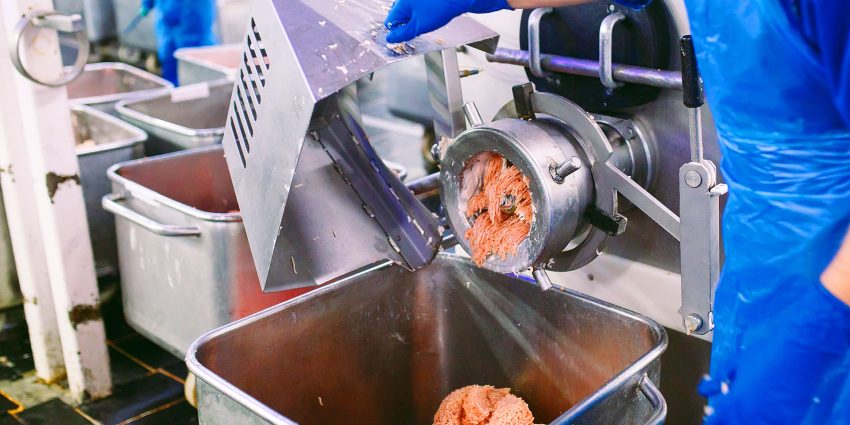
Meat Grinder
A solid grinder turns trim and tough cuts into burgers, sausage base, and ground blends. Manual versions work for small batches; electric grinders with #12 or #22 plates handle volume effortlessly.
Sausage Stuffer
If you’re making links, a dedicated vertical stuffer beats grinder attachments every time. Less heat, cleaner stuffing, fewer air pockets.
Vacuum Sealer
Air is the enemy of frozen meat. A chamber vacuum sealer (or a quality external one) extends freezer life from months to years and protects flavor.
Safety Gear You Should Not Skip
Sharp blades, heavy carcasses, and slick surfaces create real risk. Smart butchers gear up before every session.
- Cut-resistant gloves rated Level 5 or higher
- Heavy butcher apron (leather or PVC for wet work)
- Non-slip footwear with reinforced toes
- Hair covering when processing for sale or sharing
Building Your Setup Around Workflow
Owning quality tools is one thing. Arranging them so they actually serve you (and anyone working alongside you) is another challenge entirely. Whether you’re sharing a processing space with family during deer season or running a small operation, learning how to create a tool setup that flows logically will save hours and prevent accidents. Layout matters as much as the tools themselves.
Choosing Quality Over Quantity
Resist the urge to buy a 20-piece block set. Most of those knives will gather dust. Instead, invest in three or four high-carbon stainless steel blades from reputable makers. They hold an edge longer, feel balanced in hand, and last decades with proper care.
Brands worth researching include Victorinox, Dexter-Russell, Wusthof, and F. Dick. Each has strengths depending on your budget and processing style.
Frequently Asked Questions
What is the most important butcher tool to buy first?
A quality boning knife. It handles roughly 70 percent of breakdown work, from removing silver skin to separating joints. Start there before adding specialty blades.
How often should I sharpen my butcher knives?
Hone before every use. Sharpen on a whetstone every 10 to 20 hours of cutting, or whenever honing no longer restores the edge.
Can I use kitchen knives instead of butcher knives?
For small jobs, yes. For breaking down primals or whole animals, no. Kitchen knives lack the length, stiffness, and blade geometry needed for serious butchery and will dull or even snap under stress.
What is the difference between a butcher knife and a cleaver?
A butcher knife (cimeter) is designed for slicing through muscle in long, smooth strokes. A cleaver is built for chopping through bone and cartilage with downward force. Different jobs, different blades.
Are expensive butcher knives worth the money?
Up to a point. Mid-range professional knives (around 50 to 150 dollars each) offer the best balance of performance and value. Beyond that, you’re often paying for craftsmanship or aesthetics rather than function.
Do I need a meat saw if I have a good cleaver?
Yes. A cleaver chops through small bones but creates jagged edges on larger ones. A bone saw delivers clean cuts on femurs, vertebrae, and rib racks, which matters for presentation and food safety.
Final Thoughts
Great butchering is a partnership between skill and equipment. The right butcher tools let you work faster, safer, and with less waste, turning a daunting whole carcass into beautifully portioned cuts you’ll be proud to serve. Start with the essentials: a sharp boning knife, a cimeter, a cleaver, a bone saw, and sharpening gear. Build from there as your skills and ambitions grow. Quality tools are an investment that pays back every single time you pick them up.